
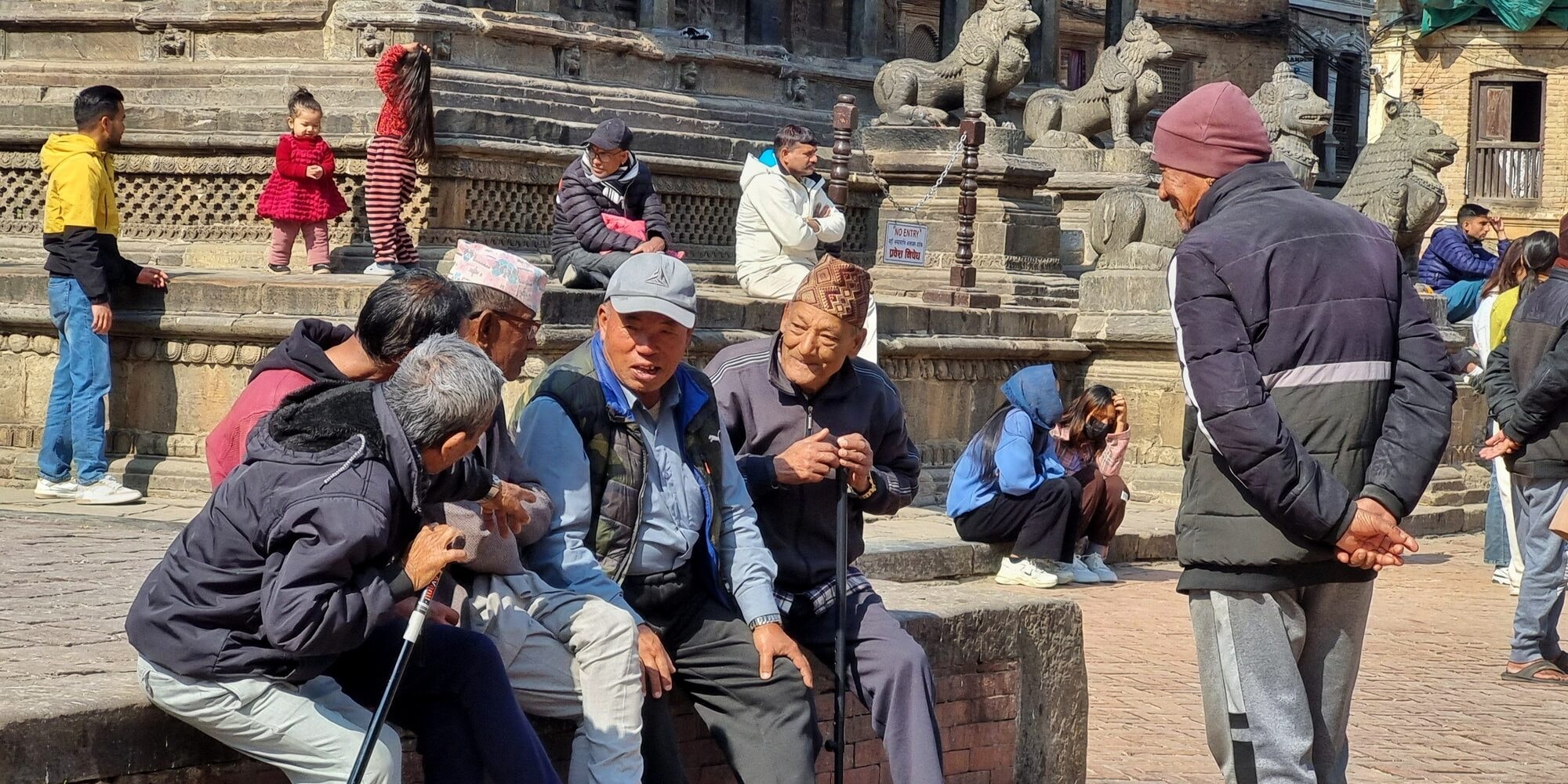
Cultural memory is more than what we recall as individuals. It’s the shared set of symbols, stories, rituals, and spaces through which communities remember their past and make sense of their present. Unlike history, which aims to be objective and chronological, cultural memory is selective and deeply tied to identity. It doesn’t simply preserve the past, but edits and reinterprets it based on what a society values, fears or wants to become.
In Nepal, this is visible almost everywhere. Walk through towns like Patan or Tansen, and you’ll encounter centuries-old temples, traditional water systems and communal squares, each layered with stories, meanings and histories. These spaces are not just remnants of the past. They are active participants in how cultural memory is transmitted across generations.
Yet memory is never neutral. Every choice to preserve, restore, rename, or demolish is a political and cultural act. When a traditional house is replaced with concrete, or when a neighborhood is redesigned without community input, it’s not just architecture that changes but also the memory that is reshaped too. Whose stories are remembered and whose are forgotten? Which structures are considered ‘heritage’ and worthy of investment, and which are allowed to quietly decay? These are not just technical decisions; they are value judgments that reflect who we think we are and who we imagine ourselves becoming.
This is especially important in places undergoing rapid transformation. In Kathmandu Valley, centuries-old communities are contending with the pressures of urban sprawl and shifting land economies. Traditional memory systems like the guthi, once responsible for the ritual and physical upkeep of heritage spaces, are being eroded by legal reforms and generational shifts. The guthi system wasn’t just about land ownership or temple maintenance; it played a major role in anchoring community practices through spatial and ritual continuity. With its weakening, an entire ecosystem of participatory remembrance is at risk.
At the same time, memory finds new forms. Young people are documenting endangered traditions on Instagram. Community groups are staging heritage walks, archiving oral histories and protesting insensitive development. Artists are creating murals, publications and even memes to respond to what’s being lost and what could still be saved. These acts may not look like ‘preservation’ in a conventional sense, but they are essential to the future of cultural memory. They reflect how remembrance adapts to its time, sometimes in deeply creative ways.
However, these new platforms also pose challenges. Social media can flatten memory into aesthetics. Tourist-driven heritage efforts can commodify the past. And the growing dominance of global architectural styles often sidelines indigenous techniques and spatial languages. In this context, we must ask: How do we ensure cultural memory remains rooted and communal, rather than fragmentary or extractive?
Professionals working in architecture, planning, heritage, or cultural fields face a growing responsibility. The role is no longer just about preserving the visible past but about understanding and engaging with memory as a living process. Design, for instance, isn’t just about form or function; it’s about narrative. Which memory does a new building echo or respond to? Does a public space reinforce the rituals that once gave it meaning or erase them in favor of convenience? Are we building spaces that remember?
Too often, preservation is reduced to a technical issue: restoring cracks, maintaining proportions, following regulations. But preservation without participation can turn memory into something sterile and disconnected from those who once animated it. Cultural memory should not be a museum exhibit but rather should feel lived-in, argued over and continuously made relevant.
To that end, we need frameworks that are inclusive, interdisciplinary, and deeply local. We need to center community voices, not just as stakeholders, but as co-authors of memory. And we need to treat built space not as a static object, but as a dialogue across time: between past intent, present use, and future possibility.
Cultural memory is a kind of blueprint. It guides communities and makes space for belonging. But if we don’t question how it is constructed and who is included, we risk building a future disconnected from the very layers that give it depth.