
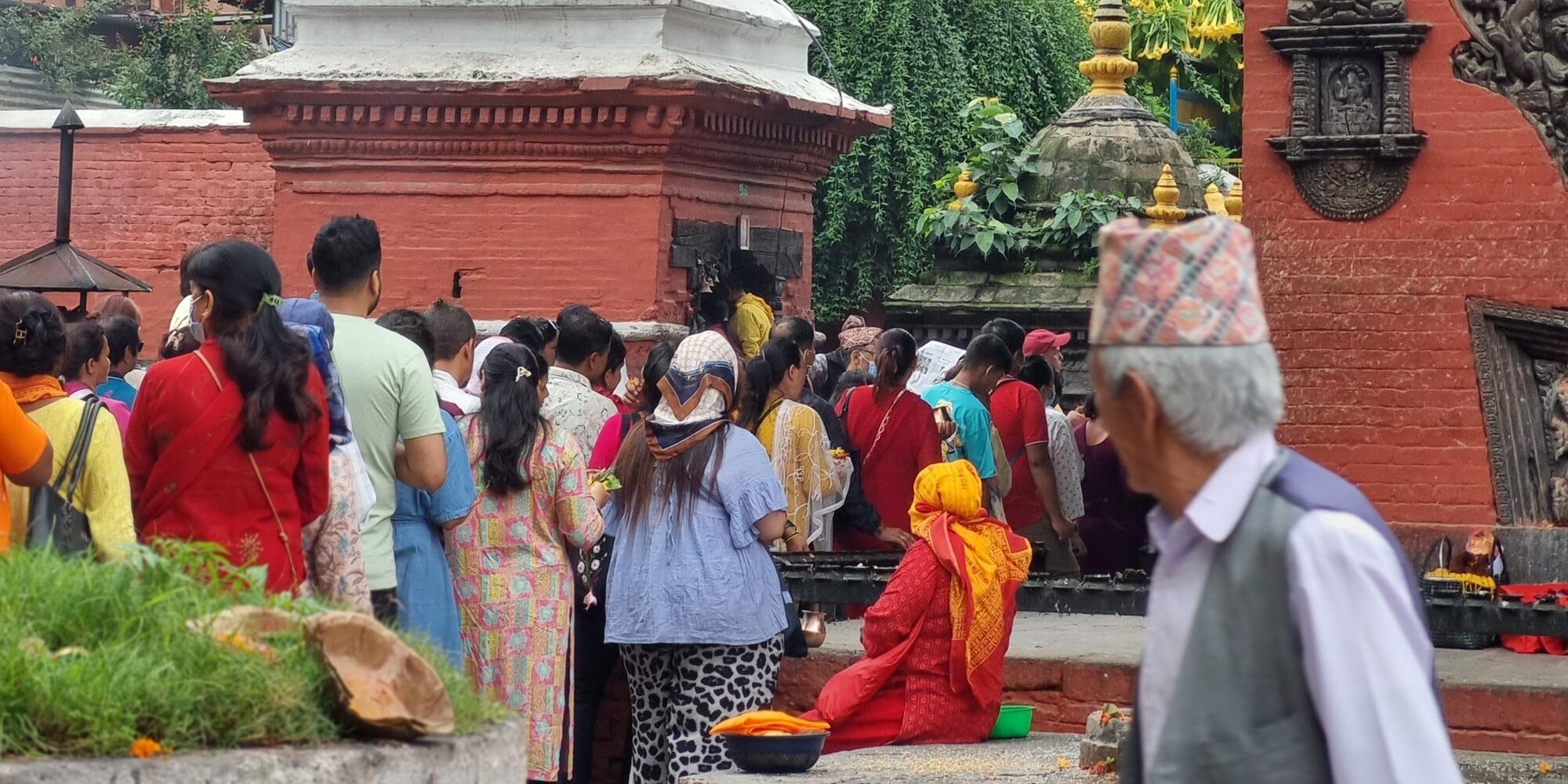
Every morning, before sunrise, the way to the temple slowly comes to life. Shop shutters are half open, incense has already curled through the alleyways, and oil vendors arrange small brass bowls like offerings of their own. The faithful start arriving with firm intention, or as if pulled by muscle memory. Shoes are removed, coins exchanged, heads bowed. The same motions, week after week.
But as I watched the line slowly curve around the temple’s walls, I found myself wondering: when does a ritual become routine? And when it does, what happens to the memory it was meant to carry?
Rituals, after all, are meant to anchor us. To bind the present to a lineage of gestures that once meant something more than just repetition. They are supposed to be memory in motion. But like all motion repeated often enough, they risk becoming automatic. The flower offered with no thought, the mantra mumbled more out of duty than devotion, the bowed head that’s already thinking of errands to run after. It happens quietly without malice. One day, the ritual is alive. The next, it’s only being worn.
In a place like Nepal, where religious rhythms shape the week and temples punctuate the calendar, this question becomes hard to avoid. When rituals are everywhere, how do we know when we are truly present?
And yet, it would be unfair to dismiss these acts just because they seem habitual. There is a kind of knowledge in repetition. The way a grandmother’s fingers move as she ties a thread around a tree. The instinctive glance someone gives toward the shrine before catching a bus. These are not always conscious acts, but they are not empty either. They hold something. Maybe a familiar rhythm, or a touch of the sacred that language can’t quite reach.
Still, the line between meaning and performance is thin. Especially now, as temples become backgrounds for selfies, and rituals are recorded more often than reflected on. There’s a risk that memory gets flattened into aesthetic, and that sacredness is measured by how photogenic it appears.
But perhaps the deeper question is not whether ritual has meaning, but how that meaning changes. A child watching their parents circle the temple may not understand the ritual, but something is being planted. An adult who once came out of obligation may one day return in search of comfort. Memory, like ritual, does not always announce itself. Sometimes it waits.
What matters, then, is not just the act, but the attention within the act. The small pause before lighting the diya. The whispered name before the bell is rung. The silence after the prayer, however brief, where presence seeps in. These are the moments where memory is not staged but lived.