
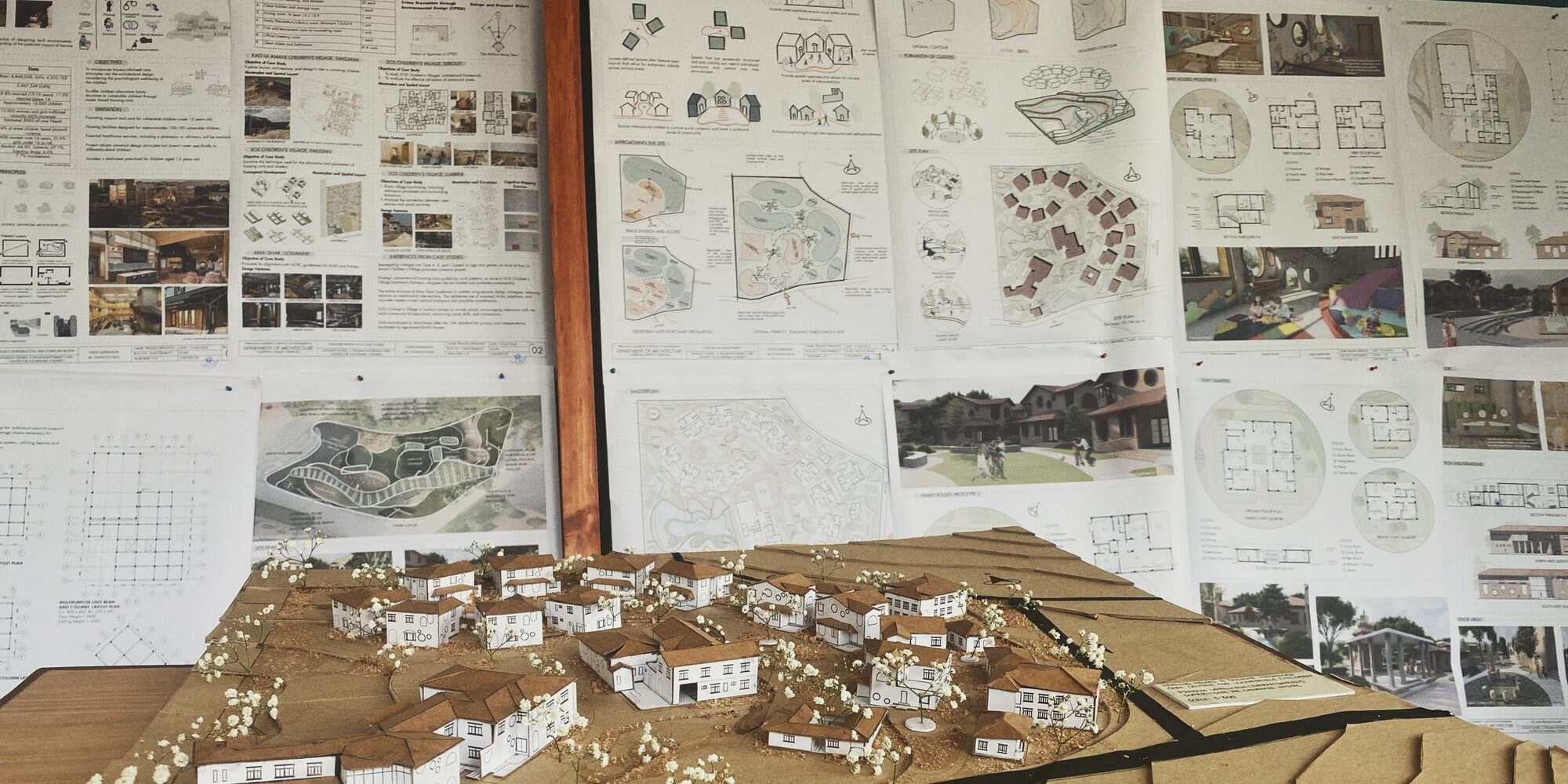
There’s a shift that happens in architecture school that rewires the way you see the world. You walk in thinking it’s about buildings, design, structure. You walk out realizing it was never just about that. It was about perception.
At first, you don’t notice it happening. The way you start analyzing the spaces you move through. How you become hyperaware of details most people overlook; the way light shifts in a room at different times of day, the weight of materials, the unspoken dialogue between space and the people who inhabit it. You start to realize that architecture isn’t just about the physical. It’s about how things feel.
One of the first things they teach you in architecture school is that there are no absolute truths in design. A space isn’t just good or bad, big or small, functional or dysfunctional. It depends on who’s looking. What one person sees as minimalistic, another might call empty. What feels spacious to one person might feel cold and uninviting to another. You can’t design in isolation because perception is fluid, shaped by experience, memory, and even mood.
There were moments in school when this realization hit hard. Long nights spent on projects, only to have my studio instructor walk in and see something completely different than what I thought I had created. ‘This feels too rigid,’ they’d say, or ‘There’s something off about the flow,’ and I’d look at my own work like a stranger, suddenly unsure of what I was seeing. It was frustrating at first. But over time, I realized that was the point. To step outside your own perspective and understand how others might experience an idea of space or a structure.
The real challenge wasn’t in making something look good on paper. It was in understanding how people would perceive it. How a narrow hallway might feel restrictive or how an open space might feel exposed. How a towering building could feel imposing or inspiring, depending on where you stood. You start to question everything. Is this comforting or unsettling? Does this invite or alienate? Is this space speaking in a whisper or a shout?
And then, beyond architecture itself, you start to apply this thinking to everything; conversations, relationships and the way people react to situations. You realize that nothing is experienced in the same way by any two people. That perception is the silent force shaping how we move differently through the world.
That, more than anything, is what I took away from architecture school. Not just the technical skills, the sketches, or the countless hours spent perfecting models. But the understanding that nothing exists in a vacuum. That everything, whether a building, a conversation, or a moment, depends entirely on how it’s felt and understood.
And perhaps that’s why architecture follows you long after you’ve left school. Once you’ve trained your mind to see this way, the world never looks the same again.