
There was a time when I was utterly fascinated by the stories my friends shared about spending their entire Dashain vacation in their villages. Every year, after the teacher asked, “So, tell me, how did you spend your vacation?”, they would paint vivid pictures with their words fresh spring water flowing down the hills, luscious greenery stretching as far as the eye could see, flocks of buffaloes grazing in wide fields with the Himalayas towering behind them, and ripe fruits hanging from trees as if calling out to be picked and eaten messily by hand, like a carefree child. It was exactly the kind of village you’d see in Indian animations like Little Krishna.
Back then, I had never been to my own village, but their stories were so clear that I almost lived every summer vacation through their words.
Then one day, by some blessing, my mama called my mom and asked about our Dashain plans. My eyes lit up. And when he asked, “Gaau jane ho?”, my ears perked up. I jumped off my four-legged bed and ran to my mom, tugging at her t-shirt, nodding and gesturing how much I wanted to go, silently begging her to say yes.
Mom had a long conversation that day. I waited patiently, already chasing buffaloes in my imagination, barefoot on those grass fields, laughing so loudly it would echo back from the mountains.
When she finally said, “I think we are going,” my happiness knew no bounds.
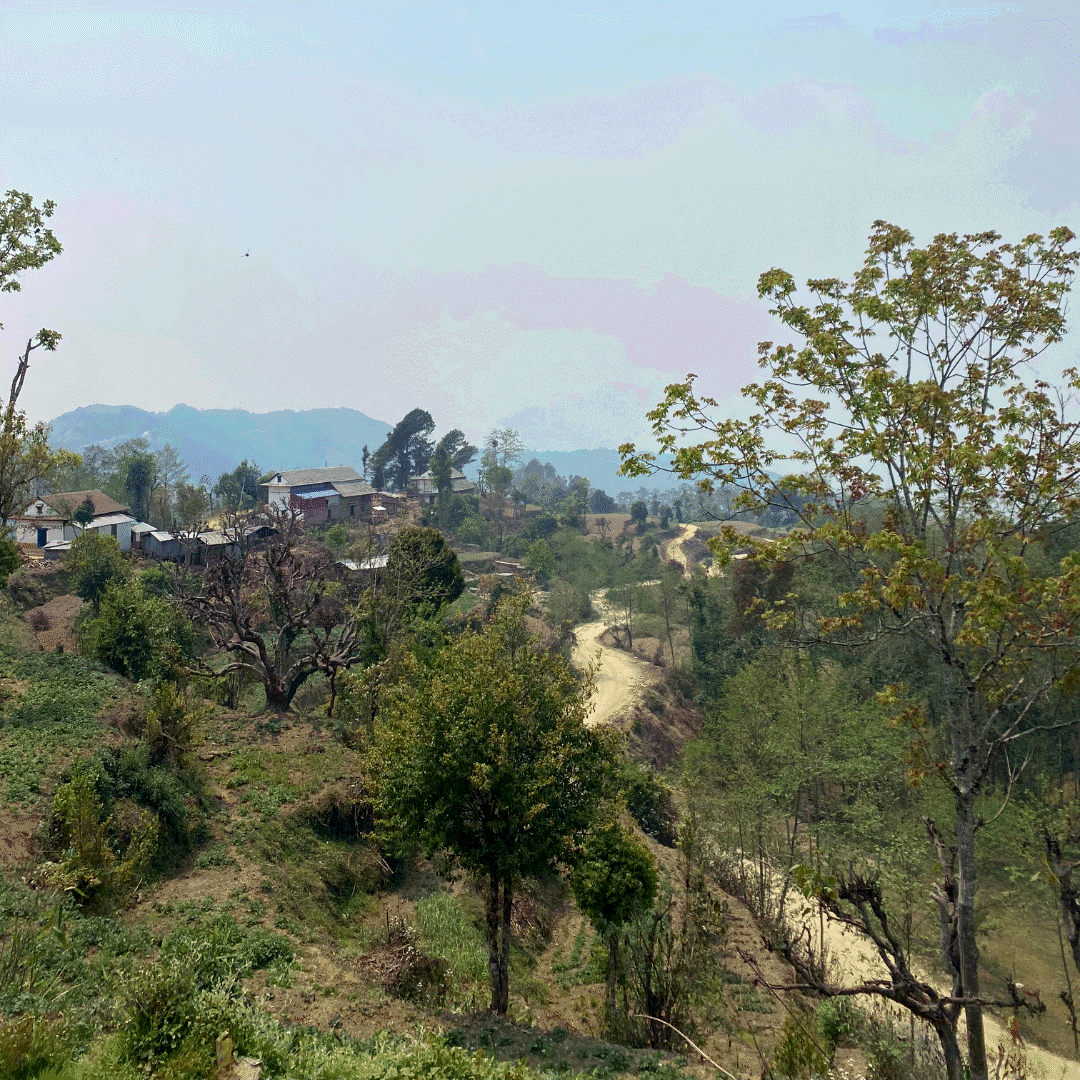
I excitedly traveled for four days, two days on a back-to-back bus ride and two more days of walking, to finally reach the village. But when I saw it, my heart sank. I was deeply underwhelmed. It felt like my life had been a lie.
The reality hit hard. There was no flowing river beside my grandparents’ house. In fact, there were no water sources nearby, not even a tap. My grandfather had to hike for 20 minutes to fetch water from the kuwa (well). There was no sight of the Himalayas, only quiet, slippery hills covered in pine trees. My grandparents had barely three buffaloes and a couple of chickens. And the trees I imagined were heavy with ripe fruits? Not even a handful were hanging from the branches.
Was it all in my head?
Was there no village with jaw-dropping scenery and captivating natural beauty?
Could I even call my village a village when it didn’t fit the standard I had created in my mind?
Looking back now, I’ve made peace with my simple, quiet village. Maybe it doesn’t need to match the glossy picture I painted in my head. Maybe it doesn’t need crystal-clear rivers you can drink from, or snow-covered mountains right outside your window. Maybe it’s not about what your eyes see at all.
Maybe it’s about the warmth you feel in the soup of Ramba noodles your grandfather brought weeks earlier, just for you.
Maybe it’s in your grandmother’s turmeric-seasoned bright yellow fried rice, soaked in six-month-old pure ghee.
Maybe it’s in the villagers living down three courtyards, passing by your home just to see the ones visiting from Kathmandu.
Maybe it’s in the memories your mom still holds close from when she lived there.
Maybe it’s that strange kind of comfort, even when it’s your first time being there.
And somehow, even after those underwhelming sights and uncomfortable travels, I still long to take those difficult roads, just to see my grandparents in the village.
And if I ever wish to visit the fantasy village of my childhood, I can always borrow it from my friends. Or visit the one my aunt lovingly shares with me. The kind of place that welcomes me like I’ve always belonged there. She makes her village feel like my own, every time.
Because I feel a village might not always be something you’re born into or inherit from your parents. Sometimes, it can be shared, borrowed, and lived through the people around you.
So tell me, what makes your village a village?