
You always eat dessert at the end, after you’ve savored your main dish and Bhaitika was just like that for me: one big, fancy festival that wrapped up an entire month-long celebration made just for us sisters. Although it’s meant to celebrate the bond between brothers and sisters and even when it has “bhai” in its name, I always felt like the sisters were the real main characters.
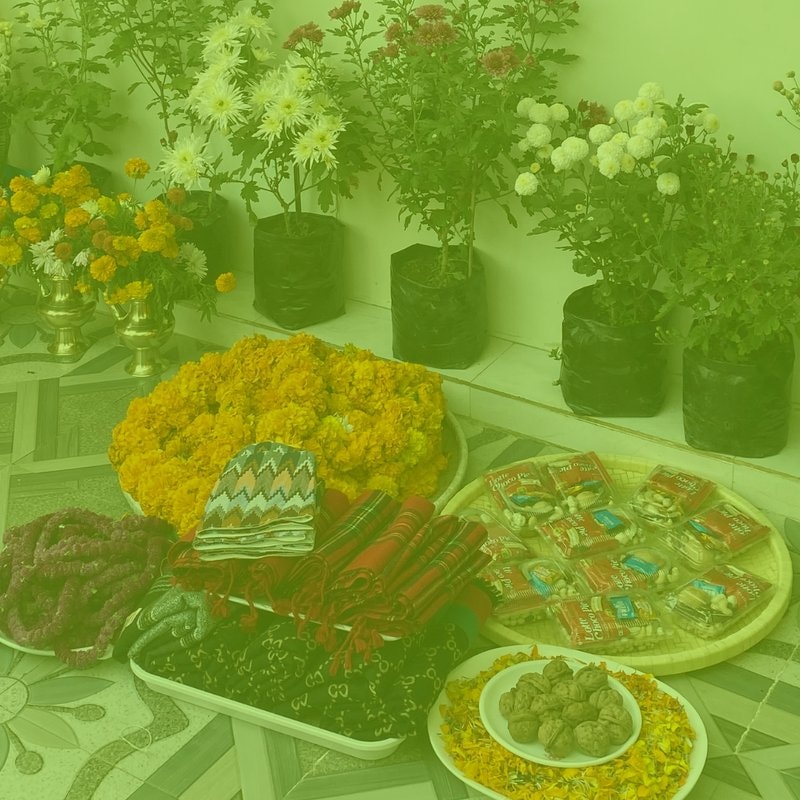
A fresh hot shower. Dolled up in new clothes. That faint sweetness of overnight marigold garlands lingers in the air, Seven-colored tika palette and right beside it, Bhaimasala-filled nanglo, each item for the puja perfectly in place. You could see the incense smoke drifting across the top floor, soft and visible in the morning light. You can almost see the house itself exhale, announcing, it’s the day.
Downstairs, Aunty’s been at it since 6 a.m. - a delicious spread of sel roti, fried boiled eggs, fish fry, chicken roast, chana, prawns, and crispy papad, all laid out on big green taparis, waiting for us to devour them.
My cousins would wait for us to put tika on them so they could finally enjoy the feast, and we’d wait for them to touch our feet and hand over our dakshina and gifts. I used to celebrate Bhaitika at my uncle’s house because my cousin sister and I shared the same set of brothers, guess it was easier to tag along with her and make a day out of it.
Back then, it was one big reunion, all my cousins coming together, dressing up, even choosing a color theme sometimes. But as the years passed, the excitement started to feel more like a responsibility. We had to take over everything auntie used to prepare for us beforehand. The reunion turned into a tradition we had to keep alive, rather than something we just showed up for. We had to plan ahead: budgeting, dividing costs, scheduling, even reminding our brothers that the yearly ritual was happening. ‘Dressing up’ the part we used to love the most, slowly slipped down the priority list. Some years, we ended up wearing our mothers’ old kurthas or lungis, because it was the last thing we had time to think about and it saved our time.
The feeling stayed the same. The setting stayed the same. The characters stayed the same.
Only the fun part started shrinking year after year.
Only the fun part started shrinking year after year.
Even after the tika and snacks, there was no playtime, no catching up, just the clatter of dishes piling up in the basin and a quiet reminder that childhood festivals had turned into grown-up chores. Everything had changed subtly; the only thing that remained constant was our brothers and their roles in the festival. They used to wait back then, and they still do. The only thing needed from their side was and still is; to show up. They can still talk, play, and catch up among themselves, while we prepare for the “real show” behind the scenes. We can only eat after they’re finished, and we’re expected to do the dishes too. It’s not like they wouldn’t offer to help but somehow, we feel obliged not to take it, because today is “their day”. Funny how Bhaitika still feels like dessert – only now, it’s one we serve, not one we savor.
And as we divide the remaining chores and clear up the leftovers, it hits me, maybe they were the main characters all along, maybe it was never our day and the “bhai” in Bhaitika is definitely up there for a reason.
It has always been their day, hasn’t it?