
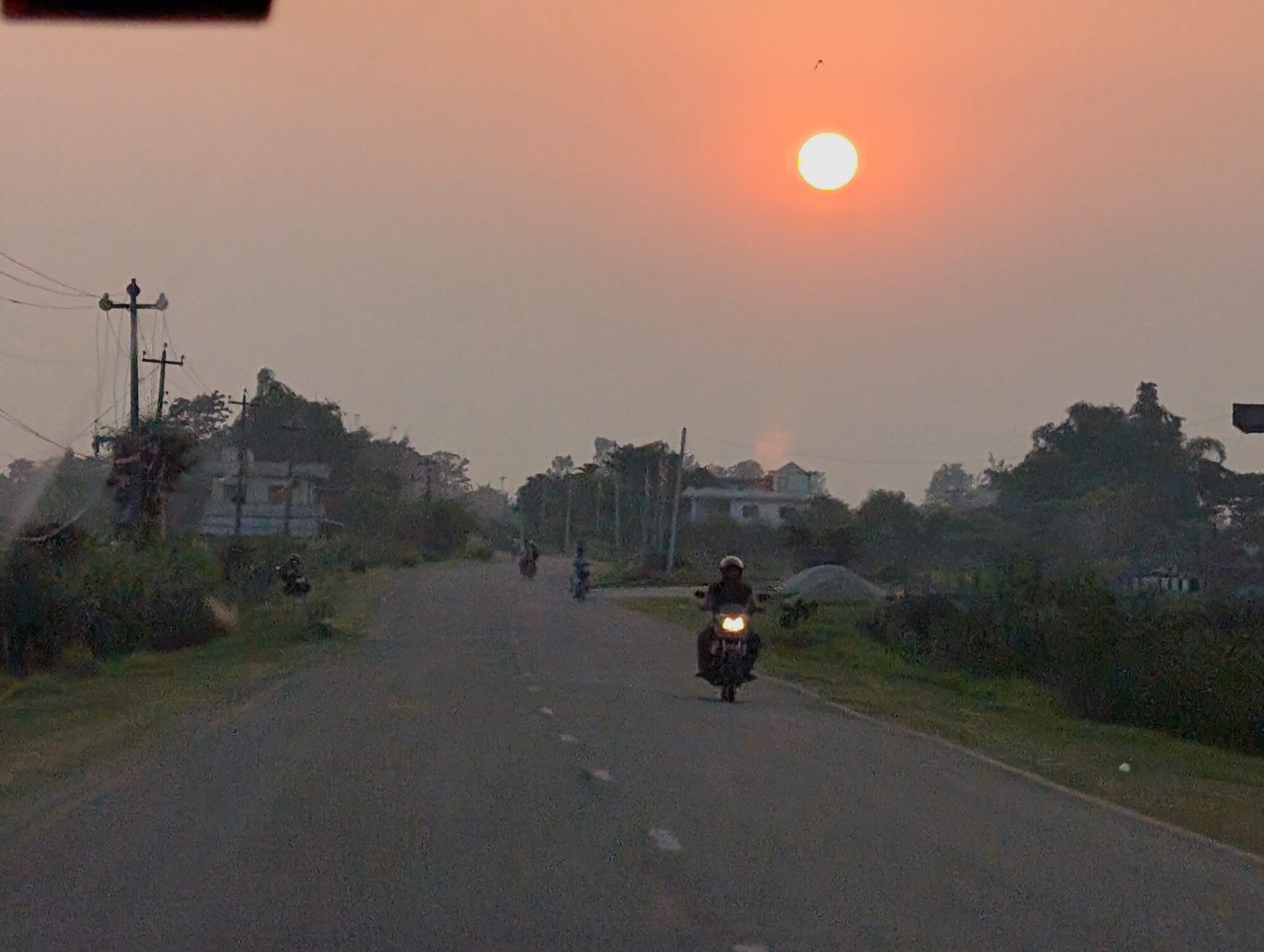
My village in Bardiya is a place I have been to only a handful of times. Yet, I would say that this place has been a big part of my story, unknowingly shaping me through the experiences and stories of the generations that came before me.
My family has been living in Kathmandu for six generations now. As priests, scholars, and educationalists in the capital city, my ancestors had farmland in the far west part of Nepal in the then recently acquired Naya Muluk. As a river island with the massive river Karnali on both sides, which meet once again only in India, the remoteness and inaccessibility of the region are foreign not even to me. Thus, stories of how my family, over generations, have travelled to Bardiya and maintained farmlands and ties to the place have deeply influenced me.
When I was young, we would travel by road for over 15 hours to get there. There was no permanent bridge to cross over the Karnali River, so there would be floating pontoons that one would have to drive over, or large locally made motorized boats (if you can call it that) for when the waters were higher. Every season posed new challenges as the river carved new obstacles. Destroying bridges, creating new land masses that had to be hiked across halfway through, or adding longer travel times and new routes through the water. These childhood trips seemed so far, yet this was nothing compared to the toils of what the previous generations had to endure.
I’ve grown up hearing how my great grandfather would travel to Bardiya, accompanied by my father (then just a little boy). There weren’t any roads to get that far west of Nepal, so they had to travel through India. They would travel to Birgunj, then across the border to Bihar, India. Then they would take a 2-day train trip through Uttar Pradesh. From a town in UP, they would cross the Karnali River on a rowboat. Then, from across the river, bullock carts would navigate six hours of thick tiger and bandit-infested jungles of India and Nepal to finally reach the village. The bullock carts would have to be requested via telegram sent from Kathmandu, with no confirmation of whether their message was received. Short messages with skipped vowels (to save money of course, they were charged by the letter) and word sent weeks in advance for the nearest station to be delivered to a local contact in the closet ‘Bajar town,’ then finally to our home in the village. Despite the surmounting challenges, my ancestors would travel with young children through foreign lands to get there. The chances of something going horribly wrong were high—someone could have been left behind on one of the many train stops in India, someone could have contracted an illness, or been stranded in the jungle. Regardless, they chose to travel to Bardiya every year.
This too was built on yet more ancestors who braved an adventurous spirit. More stories I grew up hearing would describe times when my great-grandfather’s grandfather would travel there. They had endured even worse conditions. An entourage of travelers would set off from Kathmandu, having completed poojas and rituals in hopes of a safe journey. Alms in hand and tikas on their forehead, any minor advantage they could take to improve their odds of survival. With a week or more of travelling and having to carry supplies to last, they would set out not knowing if they would return or not. The area they had to reach was colloquially referred to as ‘Kalapani,’ a place where people from the hills were said to perish due to malaria. Despite multiple illness-prone incidents and horror stories of bandits, they would set out every year for harvest, each year paving a better path forward.
Today, the longest bridge in Nepal and the best road conditions in the history of Nepal allow us to travel to our village within a day. Yet, this too feels like a daring task for a generation of handheld devices and same-day delivery. But hearing stories about the hardship of travel my ancestors endured and the struggles they chose to overcome inspired me to continue to maintain a connection to a land so far away. This history and legacy were entrusted to us and have shaped me in ways I am only now beginning to understand. It’s given me a drive to continue the story and maintain what my ancestors suffered for. It’s instilled in me a sense of adventure, an admiration of the unknown, and a belief in myself to navigate unknown waters.
Like my family before me, I have found myself again in uncharted territory, navigating a career in filmmaking in the U.S and Nepal. I owe it to myself and those before me to be grateful and not to give up even when my destination is far and my journey difficult. This hereditary capacity for risk and adventure drives me now, shaping my life today, showing me that my story is not just my own but a mere chapter in a grander book, guided gently by the stories that came before me.