
Growing up, goat was a delicacy reserved for special occasions. In my family, there was a particular way of cooking goat meat. When the said meat would arrive at the house, the head of our household, Maa, my great-grandmother (god rest her soul), would order the kitchen hands to carve up the meat with surgical precision.
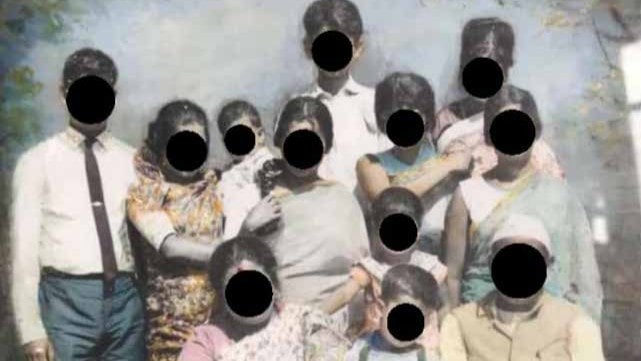
A large and mostly immobile lady in her late seventies, the only thing larger and more immovable was Maa's resolve in ruling over all kitchen matters with an iron fist. Hailing from a time in history where people would fear walking the streets of Thamel for its remoteness, and marry at the age of nine, exactingly punitive orders and cruel back-handed remarks were considered the gentlest of behaviors for her.
Hence, she would order our four-generation household to work like clockwork to separate the meat into three piles. The meatiest parts would be chopped into squares no smaller than a grape. This pile of the finest meat would be limited in stock, only adding to its already high demand. This expertly sliced meat would be cooked until all the moisture evaporated and the dish turned dark. This "buteko masu" was passed down from a time before fridges, where the meat would last the week unspoiled in a cool, dark corner of the house. Although hard on your teeth, we Pyakuryals have inherited a love of tough things, enjoying textures like churpi (hard cheese), chiura (beaten rice), poleko makai (flame charred corn), and this jerky-like buteko masu. Therefore, the pile of meat to be prepared in this manner would be coveted by all four generations.
The second pile would be a mixture of meat, fat, skin, and bone. The most abundant of the piles, this would mainly be cooked as a gravy. With a good blend of tenderness and flavor, the spices, along with the aromatics, would render the meat soft and supple. The result would be a tasty meal, yet not without its own downside; an element of risk. A Russian-roulette style portion would be served; whether you get a ladle full of solid meat or a deceivingly bony pieces, all depending on the luck of the day. Both fates were indistinguishable from each other due to the rich gravy that coated everything a color of lustrously inviting hazel, the fortune only to be revealed on one's plate.
The third bowl would contain mostly bare, stripped bones; the only meat attached to it left behind by the inexperienced hand that carved them. These jagged bones and clingy morsels of flesh would be thrown in a pressure cooker to make a thin stock-like soup that would feature a seasonal vegetable of Maa's choosing, my preferred rendition of which would contain radish. No portioning was required for the soup, and no second helping was spared of generosity and enthusiasm, unlike for the other two styles of meat. Although delicious in its own right, the bone broth often felt like a consolation prize, a participation certificate for the unfortunate, its only purpose to placate the sour hearts of those whose luck did not guarantee a fill of bhuteko masu or the gravy masu.
Unsurprisingly, my favorite was the most sought-after style of meat, bhuteko masu, holding its place at the top of the pyramid of food served at our household. Maa would store the bhuteko masu in a special container in her iron-mesh open-air cabinet at the back of the dark corner in her room. If anyone wanted a piece, she would have to give the final say. Luckily, being the youngest great-grandson in the family, I was always on her good side. Through no hand of my own, my fortune was entirely attributed to the irresistible adorableness of being a child between the ages of four and ten. With my diminutive size and appetite to match, it was easy to feed me buteko masu to my heart's content. Even at that age, I tore at that textured meat with my canines, the toughness giving way as I shredded the tastiest bits.
When I was admitted to boarding school in the fourth grade (which I was too young for...who goes to live on their own at 10 years of age?), my great-grandmother, physically unable to visit me herself, would send some of the buteko masu for me to nibble on along with my parents during visit days. Funny enough, my mother would have to sneak in the meat, and I would consume it with guilt and fear, as outside food wasn't allowed on school premises; my young developing mind torn apart with the dissonance of my rule-following do-gooder attitude and my unwilling dissent, desiring a taste of home.
The taste of bhuteko masu, along with seeing my parents for a few hours, would be the only thing to ease my boarding school blues (attributed to the homesickness, the bullying, my frequent health issues, and the separation anxiety). I was eventually transferred to a different school after years of my pleading; the final decision only being made after Maa demanded I be moved to a day school on her deathbed.
I wish I had more moments with my great-grandmother and her famous bhuteko masu. Her legacy is immortalized not only in how meat was divvied up and cooked in our kitchen, but also in having me moved from boarding school. Years after her death, when I was older and more aware of the world around me, I learned more about bhuteko masu. The very food that I would be privy to, that would be catered to me with love and care from my great-grandmother, had been hidden and restricted to my mother. I know mothers-in-law (or grandmother-in-law in this case) are stereotypically at odds with their buharis (daughter-in-laws), but learning of how my father would have to fight to have my mother be given a fair share of food and how my great-grandmother had unjustly treated her came as an unexpected shock to me.
Maybe it was the fact that my mother was of mixed caste, or maybe it was because she was the youngest buhari, but confronting this dynamic changed the way I saw bhuteko masu. A lasting symbol of love and homely care for me over the years had flipped on its head overnight, becoming a bitter reminder of childhood's naivety and the hidden social ills of our society. The darker and unacknowledged side of my family history reared its head into my burgeoning consciousness as an adolescent.
I don't remember when it stopped being prepared in our family kitchen, but the three piles of distinctively cut meat morphed into a uniform one somewhere along the way. I sometimes reminisce about the taste of buteko masu, but I can no longer see it solely as a dish passed down from the generations before me; I also see the legacy of discrimination and prejudice within it, even when I have been shielded from it all my life.
As I grow older, more things change in meaning; the movies I loved as a kid, the songs I would sing with friends, the proud history of our country we have been taught to admire. Now they reveal themselves in a different light. The lens of knowledge and introspection revealing the murky, ugly secrets that hide underneath the everyday, dressed behind an irresistible shell of indulgence, unexposed truths that render our palates tainted.