
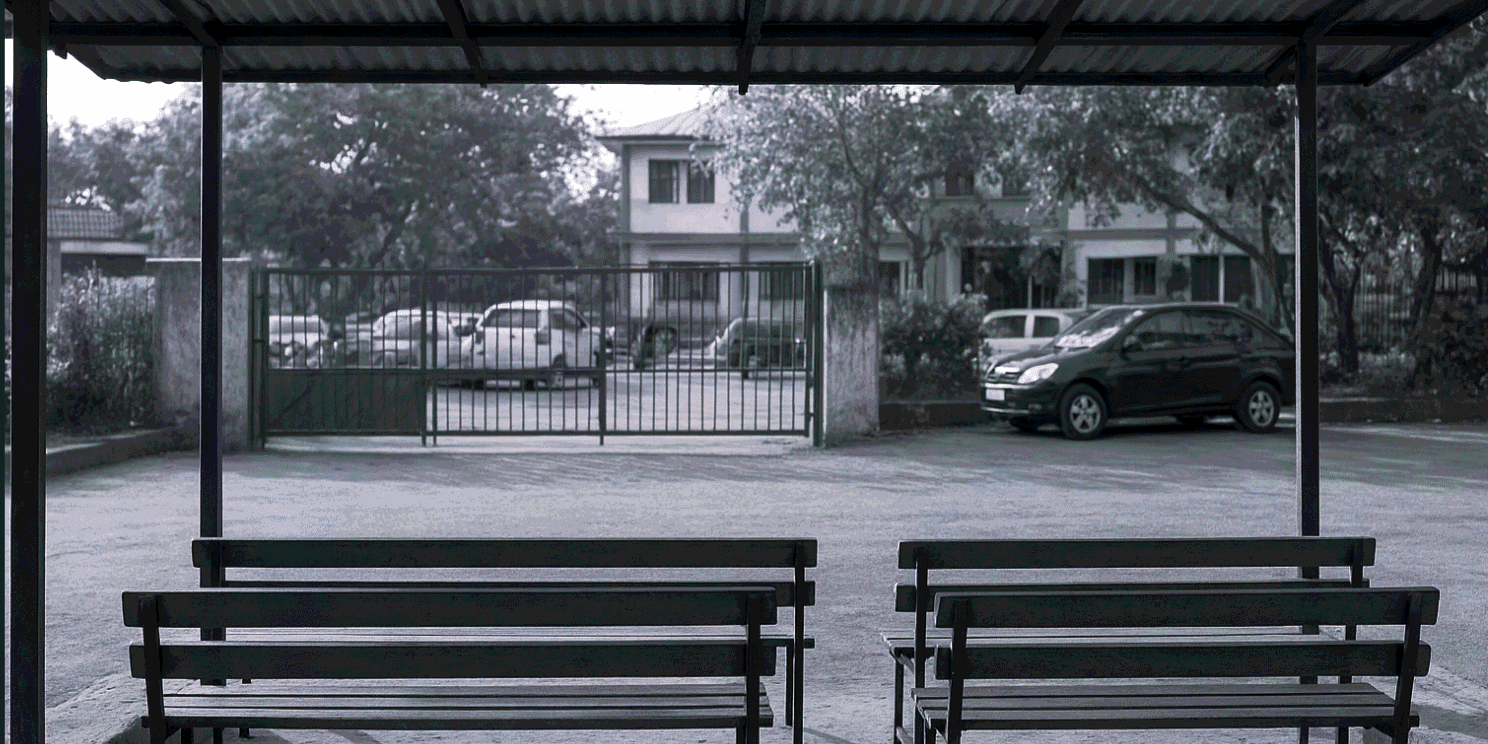
There used to be a small waiting area just outside my school gate, our own “pratikshyalaya”. It wasn’t grand by any means: a cement-floored shelter with four sets of wooden benches arranged neatly in pairs, facing the school’s parking lot. The roof was tin, so the sound of rain would drum overhead like a thousand tiny feet running all at once.
That waiting place was my after-school world. Every afternoon after the last bell, I’d walk out with my friends and claim our usual bench. From there, we could see everything — parents arriving on motorbikes, drivers leaning on their cars, students waving before disappearing into traffic. The parking lot became our stage, and we were the amused audience.
It was here that the real school day began for me. Homework and exams were forgotten; instead, the air filled with chatter and laughter. We’d exchange gossip like treasures: who got in trouble for talking back to a teacher, who had mysteriously gotten a new hairstyle overnight, whose lunchbox smelled the best that day. Sometimes the stories grew outrageous — we’d declare that someone was definitely going to run away and become a movie star, or that the school’s strictest teacher secretly smiled when no one was looking and how the craziest things used to happen when we were absent.
From my spot on the bench, I could always see the main road beyond the parking lot. Every few minutes, I’d glance toward it, hoping to spot my father’s familiar scooter. Some days, he came quickly, and I’d wave goodbye mid-conversation. Other days, he was late, and those were my favorite afternoons — more time for long stories, inside jokes, and shared snacks from half-crushed tiffin boxes.
The “pratikshyalaya” had its own moods. On sunny days, golden light spilled through the open sides, dust swirling lazily in the air. On rainy days, the smell of wet earth mixed with the metallic scent of the tin roof, and we’d sit closer together to avoid the splashes from wind-blown rain. Even in winter, when the benches felt cold against our legs, it was still our place.
And then one day, it wasn’t. They removed the waiting area to build a neater, more modern entryway. The benches disappeared, the parking lot got rearranged, and there was no longer a simple place to wait. I passed by once after it was gone, and though the space looked tidier, it felt oddly silent — as if someone had pressed a mute button on all those afternoons we had filled with laughter.
If I had a photograph, maybe I’d remember the exact pattern of cracks on the cement floor, or the way the sunlight slanted across the benches at 4 p.m. But a picture could never hold the sound of our voices, the way we leaned forward in excitement at a piece of gossip, or the warm relief I felt each time my father finally arrived.
In my memory, though, the waiting place is still there — the benches worn smooth, the parking lot buzzing with movement, and me, sitting with my friends, not minding the wait at all.