
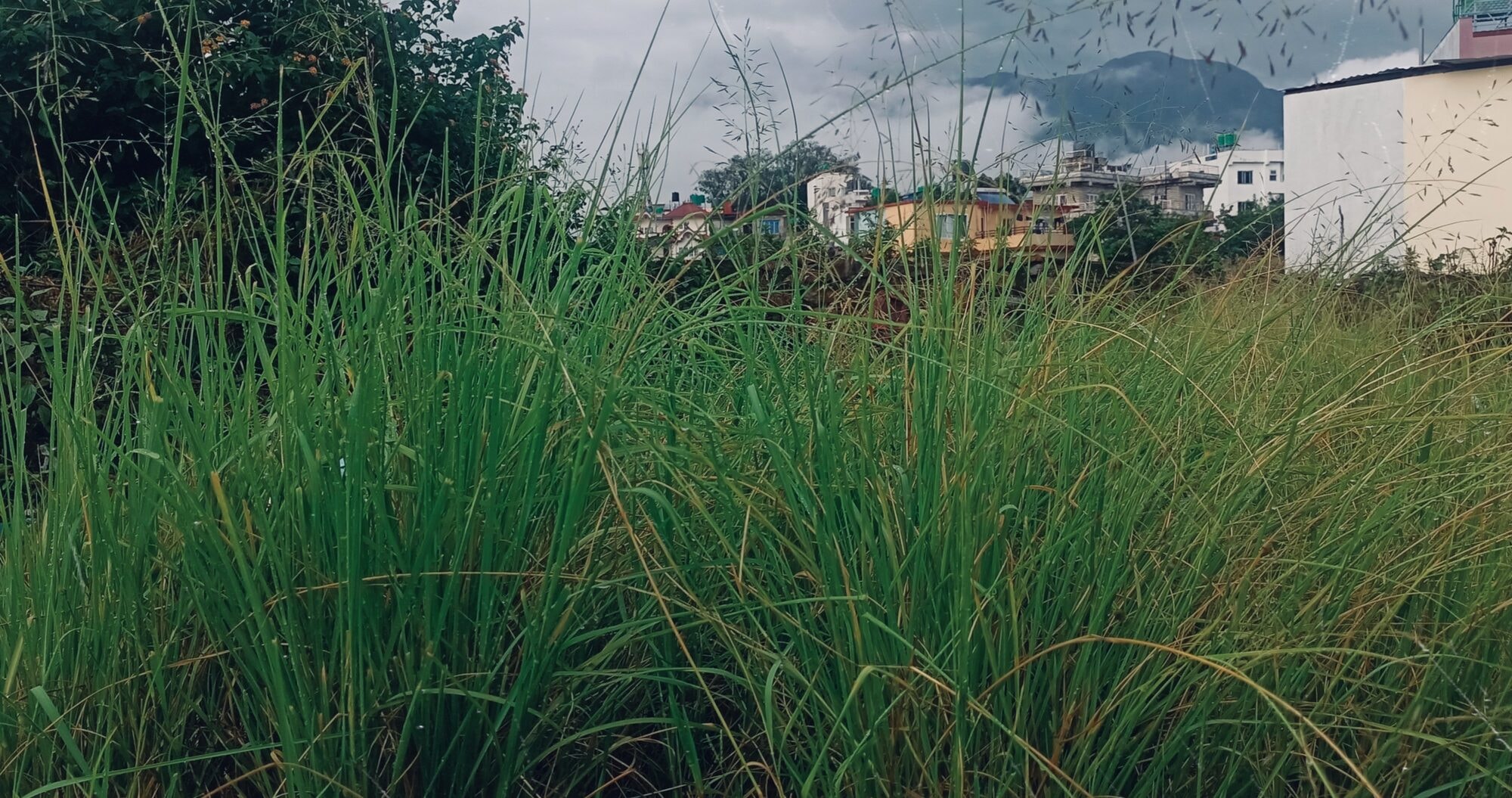
One of my earliest memories is of my mom and dad hustling day to day for what would eventually be a four-room, one-storied house built in isolation. They were particularly proud of the building: there was every reason to be, but what excited me more about the place was the huge ground in the front. Kids made it their playground, grown-ups, a place for occasional meets, and the older ones used it as a place to brood over the views. Though open to anyone, it was us, a bunch of tweens who ruled that not-so little piece of land. It was a whole new world, extending miles, or so it felt. Rested upon a cliff, there were no boundaries, yet the edges were walls enough for us. We shared a mutual understanding that the edges were the end points of the world, and no one dared break it.
This was routine from five in the evening till the time mom threatened to not let us inside the house if we didn’t return immediately. We forgot about everything that awaited us, whether it was homework or tests to be studied for. For the time being, one’s possessions were everyone’s. We shared everything from toys to individual school stories. It really wasn’t that vast and still we managed to play badminton, chungi, touch and chase, all within those imaginary boundaries. What we were told was the area around the ground would soon be filled with houses since they were “private” properties. We took no care of that. What we cared about was that grassy land, which sometimes bore white wildflowers: beautiful enough for us to turn them into crowns and bracelets.
It went exactly how we were told it would be. One by one, the perimeter we never dared to go near seemed to sprout up buildings. The houses stood at the end of our world, shattering our fiction with the actual reality of the world beyond the edge. Our approach of knowing time with the shadow of the lone house soon became fickle as more shadows filled our play space. Perhaps we grew out of ourselves over time, or it really was the buildings, the number of visitors and playmates went down with each new building. We were gaining new neighbors, but by then, it felt too much like work to make new friends, to know new people.
The place lost its value. With fewer people walking over, the grass remained untrodden, and the area started to look like a pristine road towards some wood of concrete blocks. As this continued, we moved from the neighborhood. Grievance about leaving the place didn’t last long after I found out that the new place had an even better playground. It made me forget the place for quite some time. When enough nostalgia built up, I paid it a visit. It was unrecognizable with all the similar-looking buildings; even our old house was renovated to resemble all the others. It looked as though I was stepping into an unknown land. Nothing looked familiar, no people recognizable but upon crouching a bit, those white flowers were still there among the forest of long blades of overgrown grass, waiting to be plucked, ready to adorn some heads and wrists.