
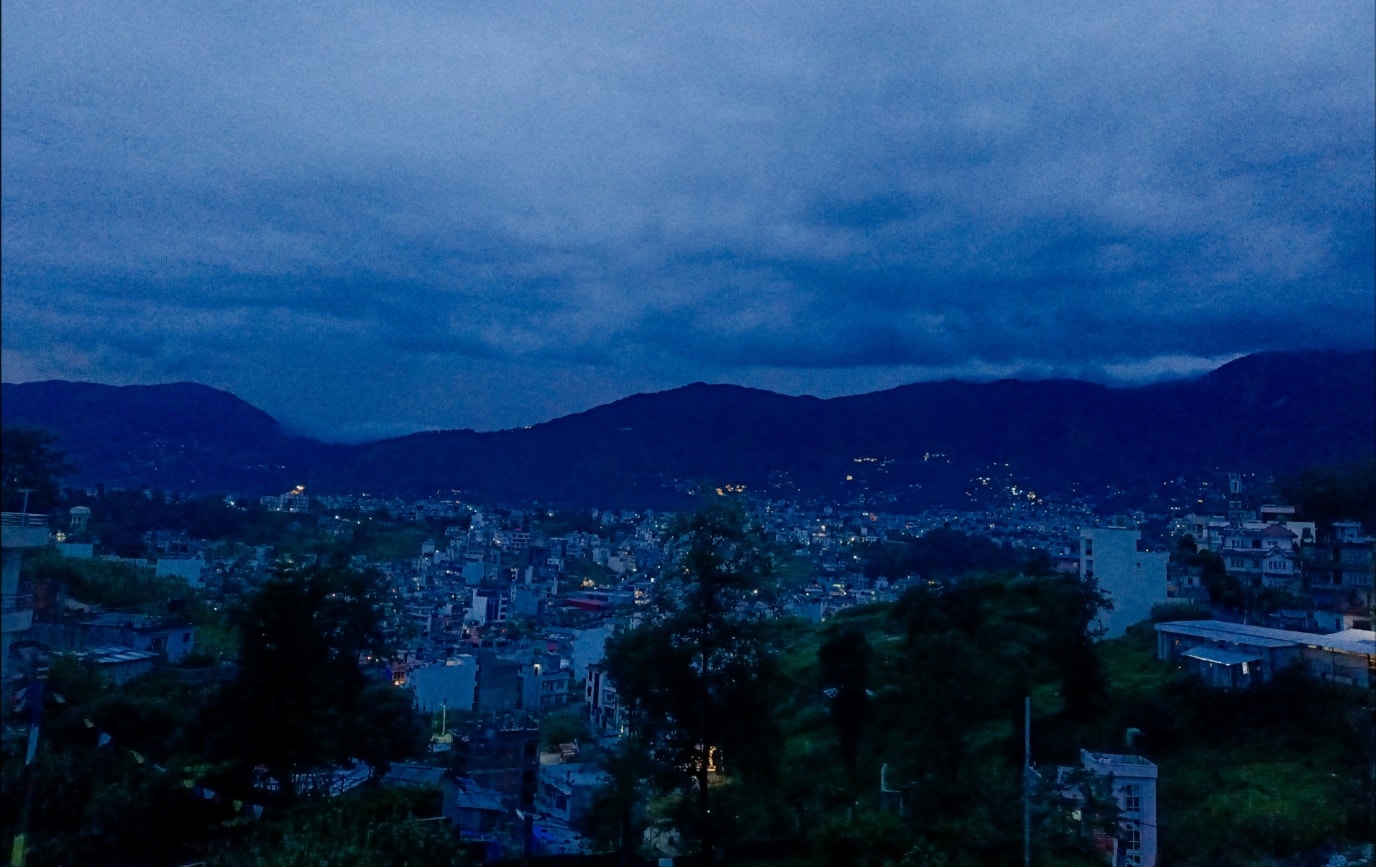
For more than half of my life, I have only ever seen the houses among huge fields of paddy and wheat around me. Even after migrating thrice, we never escaped the little VDC unit that housed mostly the area locals and their agrarian lifestyle. Each stepped hill was a single community spread across the entire area. Although non-natives flooded the place with time, natives remained scattered throughout the unit as if to mark their territory. This was what resulted in the vast farmland spaces and Guava and Mango trees in each subsequent house. It really was a village of sorts.
A kirana store stood at the place where two roads forked. These roads led to two different very well-known places; kapan Gumba and Faika, both of which were in the worst state imaginable. The store not only served the villagers with supplies but also to recognize the village itself. At around six and seven in the morning, a few people could be seen on its porch, each with Gorkhapatra and Kantipur newspapers the store provided (not sold) them with. Right opposite to it was a Bhatti that also served as a Chiya pasal during the morning and daytime. As evening air filled in, people could be seen gathered around each of those places complaining about the state of the roads and very soon, governmental units. A lot of gossip circulated around because of those two shops.
Roads were always the problems then. The place experienced vigorous wind that blew sand all over the place, and rainy seasons brought huge rainfall that settled the sand but made such mushy mud making it difficult to navigate the next step while walking. On top of that, both roads ran along quiet, abandoned forests of bamboo with no speck of light at all. It was well admitted among everyone that during the nights, the road was not to be walked in alone.
The village was soon to be named under a municipal ward, and it did. Over time, under the name of developmental projects, the Bhatti pasal was removed while the kirana store turned into department. No newspapers circulated, though talks did and they all appreciated this change. Empty farmlands began being sold and the newcomers filled it all with new trendy houses. Pitched black roads were built on the muddy path while the bamboo forests were replaced by the kind of lights that could only be seen in the smart city models my classmates made. Eventually, Buses were introduced and people started recognizing the place just by its name.
This change took time but was so silent and quiet that it could be felt only by looking at the place in retrospection. There was a time during which the storekeeper stopped keeping stash of newspapers, but no one realized that it was the turning point for the store itself. Streetlights brought a rush of relief about the thought of night walks, but it was way until later that I missed the fresh wind that the forest brought in. Buses made everything easier, but the roads turned unwalkable even in daytime. Everything became easier and attainable like I imagined all the big cities to be but, in the end, it really was the nostalgia of that small village and the sense of what I missed within it is what made me realize that it really had turned into a city.