
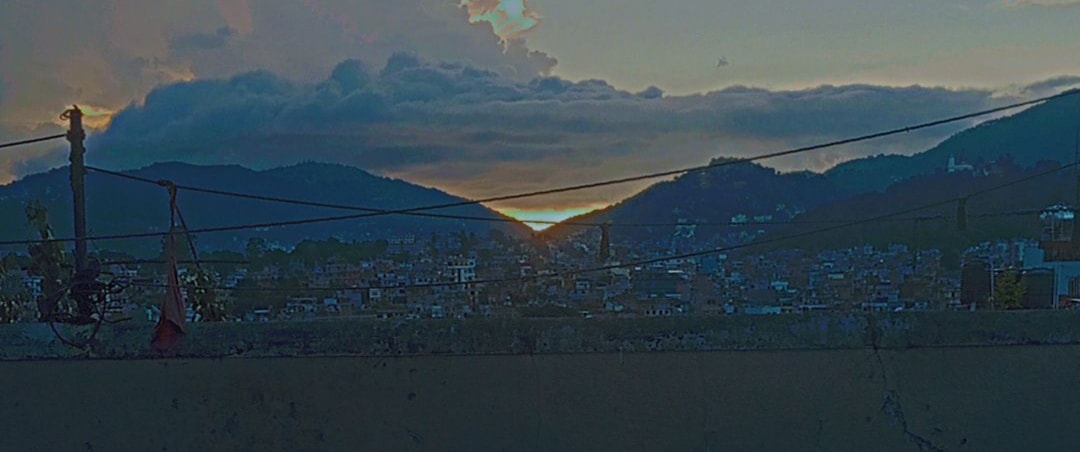
Our terrace still stands tall above the house, its stone-mixed tiles stretching wide, carrying the same view of Swambhunath as it always has. Yet, the terrace of my childhood exists only in memory. The laughter, the games, the small worlds we built there have slipped away, leaving behind only the echo of a time that can’t be captured by a photograph.
When I close my eyes, I see the staircase leading up to the upper terrace, and I hear the game we created ourselves: declaring the lower terrace as lava, and the narrow stairs the only safe passage. We ran, we jumped, we screamed with both fear and delight, convinced that the floor below would swallow us whole. The terrace wasn’t just a flat stretch of stone; it was our kingdom, our playground, our stage. We filled it with traditional games, imaginative inventions, and rules we made up on the spot. My favorite was always doll house and bhada-kuti. I remember the day we held a full marriage ceremony between my doll and my cousin’s, filled completely with laughter and enjoyment.
The air Itself felt different in those days. The smell of Dashain lingered in the breeze, mixing with the faint scent of food drifting from the neighborhood kitchens. The sky was alive with kites, the soft, cold wind whispered winter was on its way. In the mornings of winter vacation, we would gather on the terrace, basking in the warmth of the sun after our meal. We kids would try to finish homework, our notebooks spread across the floor, while oranges and peanuts were passed around. Even today, that pairing, the sweetness of orange and the earthy crunch of peanuts, pulls me back to those mornings of comfort, family, and simple joy.
Evenings were when the terrace bloomed into life. The setting sun seemed to pause, as if it was too mesmerized by our games and was loving to see us play, hear our laughs. We filled the hours with chungi, langadi, London stop, ghar- ghar, pasle, and endless other games. Time bent around us, slowing so that laughter could last longer, arguments could stretch, and exhaustion never felt like a reason to stop. We ended those nights with faces red from running, bodies tired but hearts unwilling to let go. If I could capture anything from that terrace, it would be those wide, carefree and unguarded smiles, the kind of happiness that adulthood rarely gives back.
Our terrace was also a place of order and creativity. We cleaned it often, declaring new rules as though it were a kingdom we ruled. We shaped things out of mud, earning scolding from our parents, but never regret. Everything we touched there seemed alive with possibility.
Now, when I step onto the terrace, it is quiet. I go not to play, but to find peace, often with music in my ears. My cousins and I don’t run across the tiles or pretend the floor is lava anymore. Instead, we talk about careers, exams, responsibilities; the vocabulary of adulthood. The terrace still holds the same view, but the magic of childhood is gone.
The terrace of today is just a terrace. The terrace of my memory is a world that time took away. And no picture could ever bring it back.