
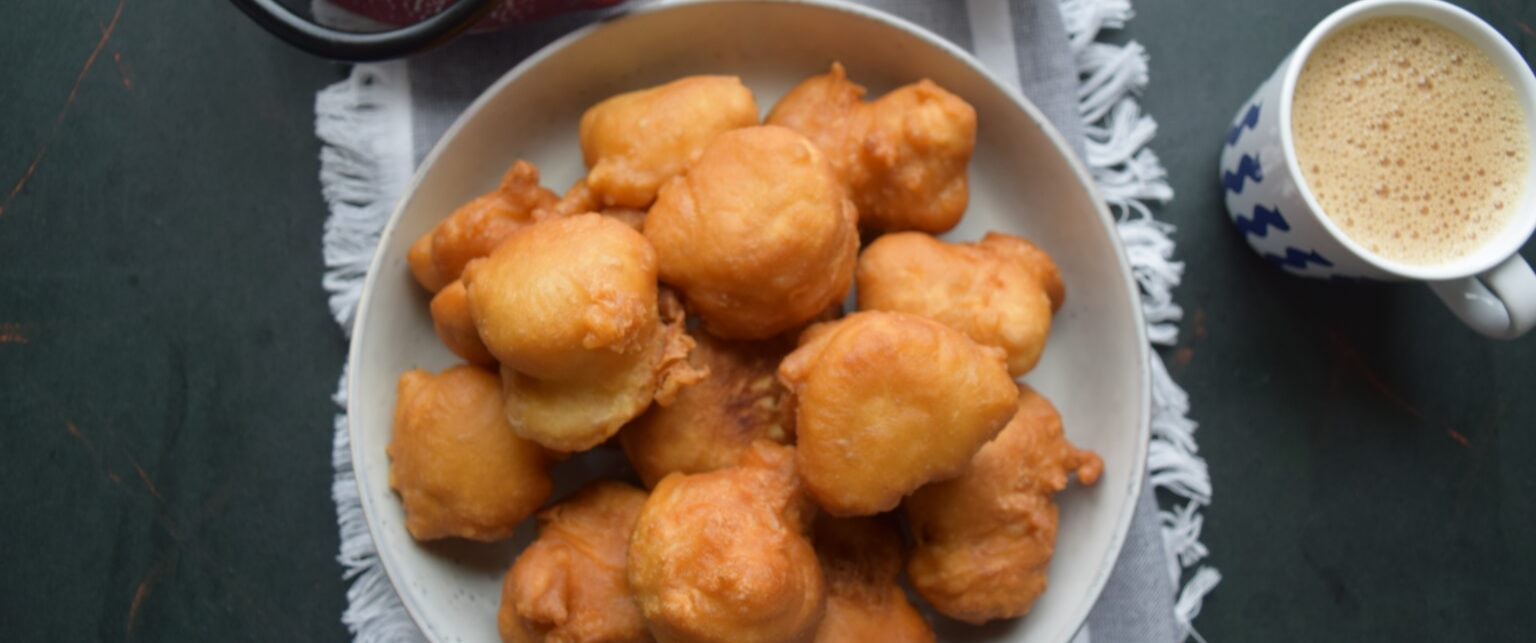
In the heart of Kathmandu, where Newari flavors linger in the air, my childhood tasted like gwaramari and milk tea.
While other kids waited for Saturday to play, I waited for it just to eat my comfiest food; gwaramari. Every Saturday morning brought the pleasure and happiness of eating gwaramari after a week-long wait. Dewy mornings, a crowded shop buzzing with chatter, the warmth of the stove, and the smell of oil in the air; that was what my Saturday mornings were made of. And when the shopkeeper finally handed me a paper bag full of puffed, round bread after a long wait, it felt like a little victory. Saturday mornings with gwaramari and milk tea were a weekly ritual for my family.
Gwaramari is a traditional Newari cuisine, meaning round bread (gwara = round and mari = bread). It’s small, puffed, round. Sometimes crunchy, sometimes soft. It’s best when eaten hot and golden brown, with milk tea. My neighborhood vendor used to make one of the tastiest gwaramari unmatched by anyone. Not even himself, because even though the shop still exists, the essence and that magic? It vanished, lost somewhere in time.
Just like Jethalal couldn’t imagine Sunday without jalebi and fafda, I couldn’t imagine mine without gwaramari and milk tea. That weekly ritual turned a simple traditional snack into a source of bliss, anticipation, and comfort.
I still eat gwaramari, but the rush, joy, and longing to eat it are gone. It no longer brings joy, only quiet complaints about how bland it feels now, and how much I miss the old gwaramari and its flavor. I compare how the shape has gotten bigger, the quality has gone down, and how unmatched and untouched it feels compared to the gwaramari I once knew.
Now, when I think back to those Saturday mornings, a quiet ache settles in. How a simple snack used to bring immense pleasure, but now it’s just a snack. And maybe it’s not just about the snack, but about growing up and adulthood. The fading joy and excitement reflect how, as children, every little thing brought us happiness, satisfaction, and wonder. But those same things now feel like nothing but emptiness.
Newari culture has always amazed and attracted me. Whether it’s the cuisine, jatras, festivals, rituals, or costumes, they have always been close to my heart. And I am grateful that one of my childhood comfort came from such a rich culture.
I will always be thankful to the man who made such a delicious snack – one that flavored my childhood with warmth, joy, and tradition. If I could, I would thank him for shaping those simple Saturday mornings into something unforgettable.