
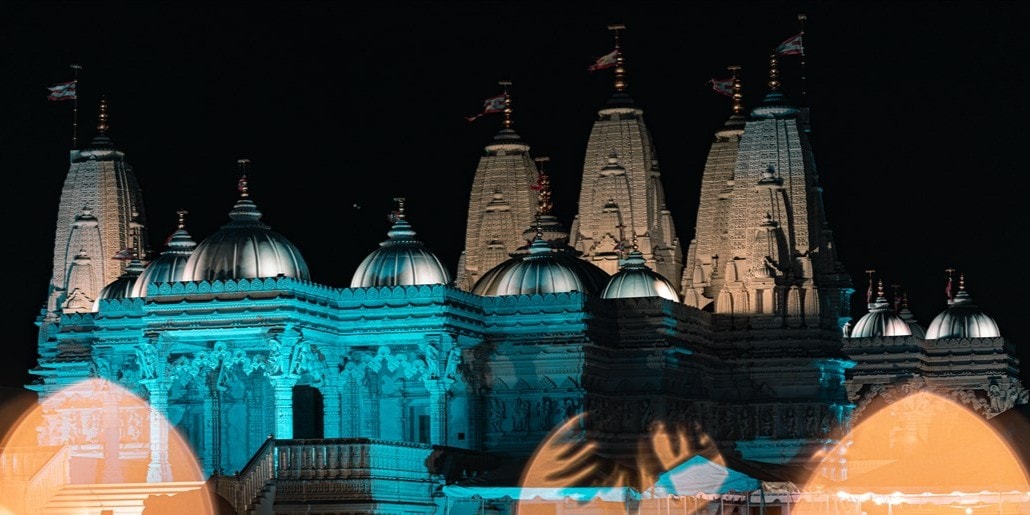
The temples abroad are polished, peaceful, symmetrical. Ganesha doesn’t have chipped ears, and the incense burns neatly in glass holders. The marble shines like it’s never seen dust. Everyone bows in order. There’s a schedule. There are rules.
And at first, I was grateful. After all, isn’t this what we always said we wanted? Cleanliness. Structure. Respect. No stray dogs lying on the mandir steps. No pigeons doing unspeakable things near the bell. No random uncle interrupting the aarti to chat about gas prices.
It was, and I mean this lovingly, so polite it hurt.
I found my first temple abroad during a lonely Saturday. I had finished laundry, cleaned my apartment, responded to my parents’ messages with emojis, and still felt like an over-watered plant.
So I Googled. Found a ‘Hindu Spiritual and Cultural Center’ just a 30-minute bus ride away. I put on the kurta I hadn’t worn since I packed it in a rush and left.
I walked in and the floors didn’t creak. The air smelled faintly of sandalwood and filtered air. There were laminated signs requesting silence, donation QR codes, and someone had translated the Hanuman Chalisa into three languages and printed it on pastel stationery.
It was beautiful. Respectful. Pristine.
But I felt like a tourist. A polished imposter.
I sat in the back and tried to pray. The words were familiar, but they sounded like I was reading them through glass. It didn’t reverberate.
I missed the mess.
I missed the broken bell in the old Shiva temple back in Bhaktapur that everyone had to hit three times to make it ring. The prasad that was a bit too sweet because the priest’s son had added extra sugar, and no one dared to say anything. The dog that slept at the entrance, who everyone called Kaalbhairav because he barked at anyone who dared to enter with bad intentions (or meat in their bag). The chaotic hum of a dozen conversations, kids running barefoot, old women gossiping mid-chant.
I missed the life in the worship.
Because at home, temples weren’t just sacred. They were social. Messy. Human.
They were where my grandmother once tied a red thread around my wrist after I passed my SEE exams, whispering a blessing louder than the pujari’s mantras.
They were where I once cried quietly during a family puja, and no one asked why. They just handed me more tika and told me to eat the prasad.
They were where devotion came with spilled oil, loud bells, and the smell of wet socks because someone had left theirs too close to the abhishek water.
Here, abroad, everything is controlled. Sanitized spirituality.
And yet, how can I be mad at that?
People have tried so hard to keep the culture alive in these glass boxes. I see it. I admire it.
But I can’t feel it.
It’s not the temple’s fault. It’s the distance. It’s the nostalgia that tricks you into believing chaos was comfort.
But then, sometimes, something small cracks it open.
Like the time I walked past the ‘cultural center’ during winter and saw an auntie yelling at a kid for not removing his shoes.
Or the time they played bhajans out of sync with the tabla, and someone clapped off-beat and didn’t care.
Or when a little girl offered me a marigold garland, and I had to bend down to her level, and she smiled with all her baby teeth missing.
And in those small cracks, the mess leaks back in.
The humanness. The noise. The warmth.
Suddenly, this polished temple doesn’t feel so foreign. It starts to echo.
Maybe it’s not about finding an exact replica of home.
Maybe it’s about letting the imperfect pieces show up wherever they can; even if they come in mismatched socks and a spilled oil stain.
Now, I go to the temple not for the rituals, but for the reminders.
That even in exile, we carry our own gods.
And they don’t mind a little mess.
They were born in it.
And maybe, so was I.