
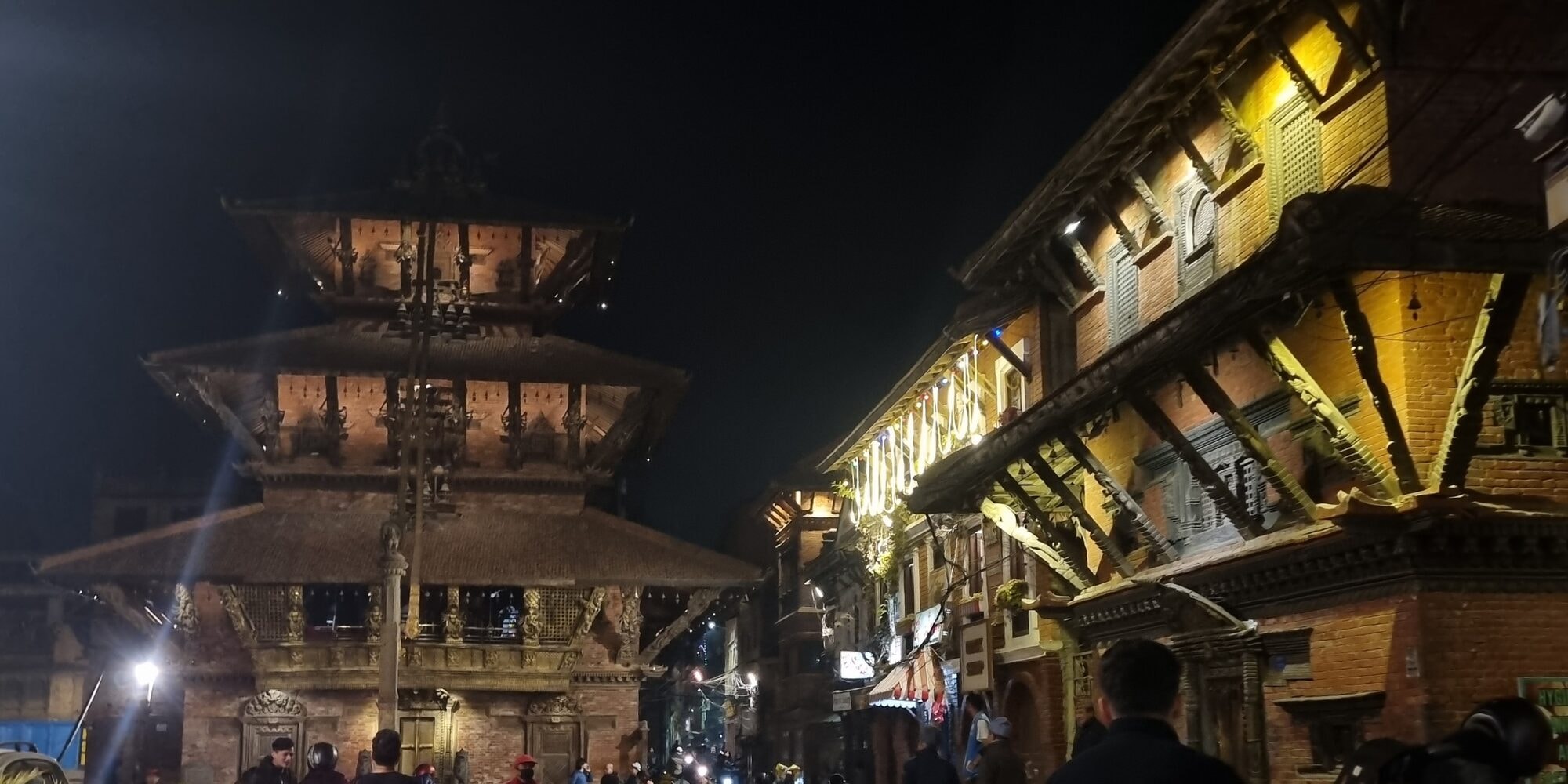
There is a kind of air in Patan
that doesn’t just enter your lungs
it lingers.
Not like perfume, but like memory.
It starts with the incense.
Not the delicate, boutique kind
but thick, handmade coils
that burn too fast in winter wind
outside Krishna Mandir.
It curls up with the morning fog,
mingling with the smell of diesel,
muddy shoes, roasted peanuts,
and someone frying sel-roti a little too early
for the gods but just in time for the walkers.
The bells are not shy here.
They clang with intention.
The air shudders a little when they do,
like it remembers
all the names whispered into it
over centuries
names of lovers,
of sick mothers,
of missed exams,
of gods asked to fix things
no one else could.
Even the bricks smell old in Patan.
Sun-heated and sandalwood-stained.
Some of them hold the sweat
of artists who carved deities
into walls like they were writing love letters
they knew no one would answer.
I remember standing there,
by the little tea shop behind Hiranya Varna Mahavihar,
breathing in cardamom and kerosene,
feet sticky with dust,
as a dog wandered into the courtyard
and curled up like he belonged
to Buddha himself.
He probably did.
Now I live oceans away
where the air is filtered,
climate-controlled,
smells like nothing
or, worse, vanilla-scented dish soap.
People ask what I miss.
I say my family. The food. The festivals.
But really
I miss the air.
The unfiltered, full-bodied,
holy chaos of it.
I miss how it filled me
with something that wasn’t just oxygen,
but place.
When incense burns here,
it smells too clean.
Too careful.
It doesn’t mix with the sweat of passersby
or the scent of wet dogs shaking off in temple courtyards.
It doesn’t carry the gossip of shopkeepers
or the sharp tang of copper coins passed hand to hand.
I try to recreate it sometimes.
I light three sticks at once,
boil some cardamom tea,
play a recording of temple bells off YouTube.
It’s close,
but the air stays foreign.
Maybe you can’t bottle Patan.
Maybe the smell only lives
in the narrow alleys near the square,
in the folds of a priest’s shawl,
in the oily fingerprints
on the copper statues no one’s supposed to touch.
Maybe the air itself is a kind of god,
and I left mine behind
when I crossed the ocean.
But still
on some nights, when my window’s open
and the wind gets curious,
I swear I smell
just a hint of home.