
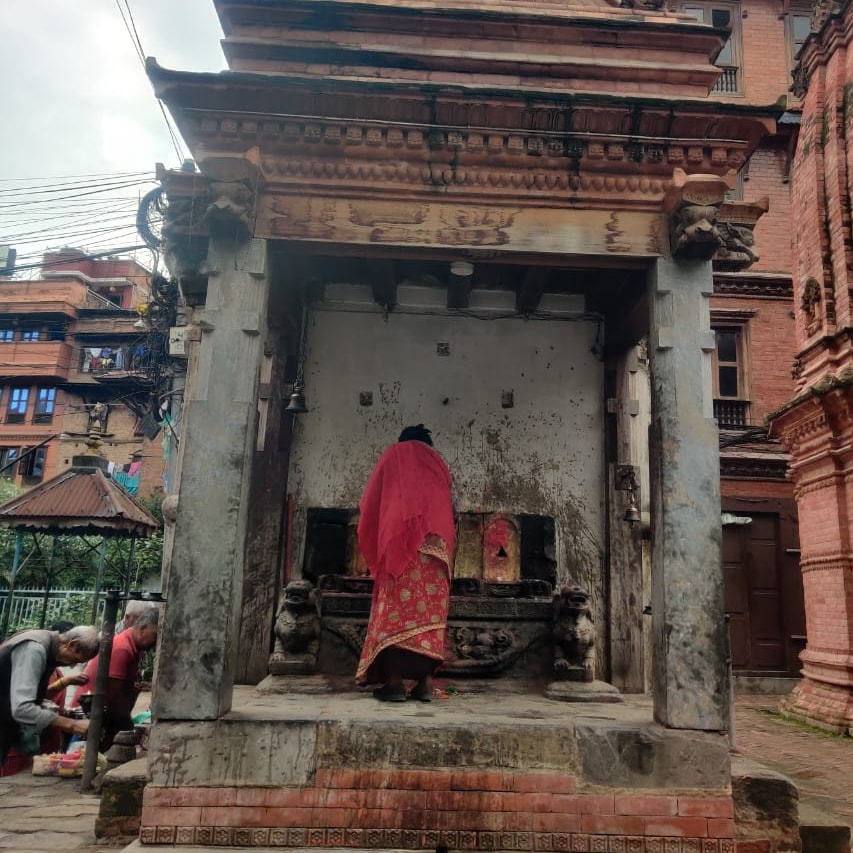
The longings of the place I was born feel different as I am not living there right now. I always miss the feeling of being there. The early morning sound of women fetching water from the well, bells ringing from the temple, and bhajan is how I used to wake up every morning. Then starts my daily routine: sweeping the house from the top to the ground floor and worshipping pikhalaki (god just outside our house), fetching water from well and doing puja first at the pikhalaki and then inside the puja kotha (room where different gods are placed). If I had time, I would go to the temple as well. A typical Newa culture. I belong to the Newa community. Being born and raised in Bhaktapur, I am rooted to the culture and traditions here.
In Bhaktapur you can find hundreds of surnames which are said to have derived based on their work, physical appearances and nature. My surname is Duwal. We fall under the farmers group. According to the article written by GR sir on his page 'Kimbandanti ma Bhaktapur’, our surname came from the word ‘Dauwarik’ in the Lichhavi period, which means the one who stayed at the door of the palace. For me Duwal is not just a surname, it is an identity and a reflection of who we were and who we are. It connects us with our roots, culture, tradition and values that we have as Newa. This gives me a sense of belongingness and ownership.
From childhood we have been celebrating different festivals throughout the year. Each festival holds a reason and importance for celebration. For example, Gathamaga chare and Gunhi Purnima are somehow related to paddy plantation. Before Gathamaga chare, we wash the clothes worn during plantation, and on the day itself, we bring jal from the temple and splash it in all the rooms for purification. And on the day of Gunhi punhi we feed rice to frogs (byancha ja nakeu) for helping us during plantation. These are just some festivals that we celebrate. There are many more that I haven’t included.
Moreover we (Newa) perform different rituals from birth to death. Each one has its own meaning, importance, and way of performing. Some rituals are Jaibeli byenkegu on the sixth day or the tenth day after the birth of a baby, pasni, keta biyegu (Bratabandha), ehee, etc.
Additionally we prepare different delicacies in different festivals and jatras. Yomari on Yomari Punhi, mutumari on Mha Puja, kwati on Gunhi Punhi (Janai Purnima) and many more.
My identity lies in this deep sense of belongingness and ownership. The language I speak, the clothes I wear, the food I eat, the values I hold, and the festivals, jatras I celebrate define who I am.
For me, my surname is the pride that I carry, and it connects me to the place I come from. The temples, the alleys, the falchas, the courtyards, the typical Newa house, the festivals, jatras, foods, culture, etc. all come together along with my name. It brings me a deep sense of satisfaction when I talk about these things. It feels like this is where I belong and this is where my home is. So I have a responsibility to protect it.