
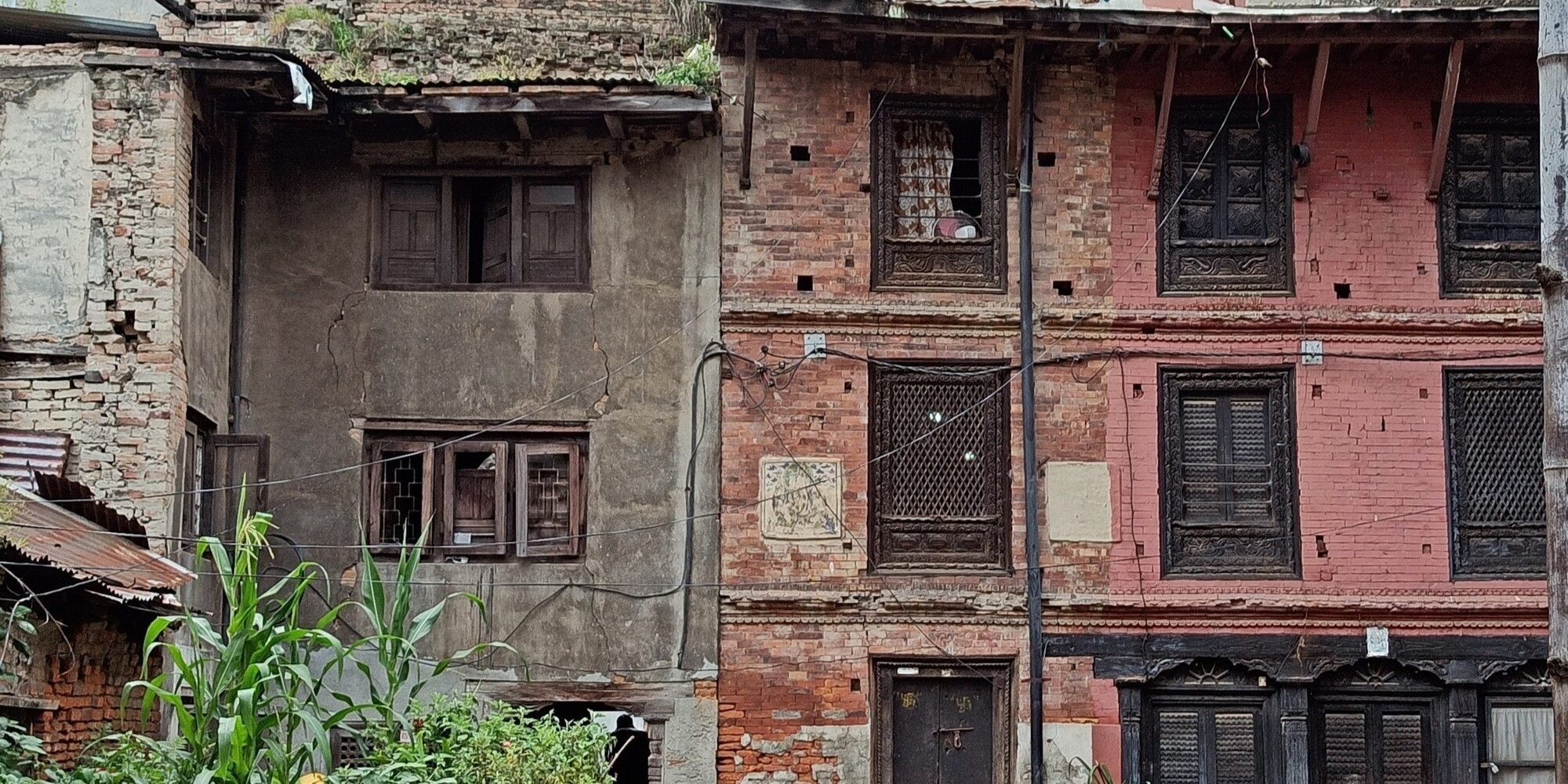
Growing up I never imagined that the place I was raised would linger so vividly in my memory. Born in the heart of Bhaktapur, you could find a temple, or god and goddess at every turn. A house that stood at the corner of the courtyard, surrounded by other homes and guarded by chhetrapal ( god).
There are five chowks (courtyards), each connected by narrow gallis (alleys). Every morning we used to go to one of the chowks to fetch fresh water from the well for daily puja and other purposes.. Morning in Bhaktapur begins with puja, so we frequently go to temple with or without puja thali and worship every god we passed on our way back home.
Being there, we got to know about each and every festival that was about to come because for all of them, we would do cleaning, washing, bathing, and more. All of these activities were carried out in chowk and people laughed, joked, talked doing their work. It used to be very lively and each festival was fun. Running to the tole to see jatras, Nawadurga dance, and other festivals is still fresh in my mind. People from our chowk or other chowk used to inform us that the jatra had started and that we should go and watch. In most of the festivals we prepare different delicacies according to the festival. For example, we made wo: and chatamari in Siti Nakha, and kwati in Gunhi punhi (Janai Purnima).
Living there was good and I spent my childhood there. Summer was hot and we sat near the galli to catch some air. Our mother and other women used to come out during the day and knit while talking about different things. During winter, it was cold, and in the mornings after cooking, we used to go to another chowk to tie our hair and get warm under the sun. As I had siblings, while waiting for them to finish, we used to play chungi. Thinking about it now, the games we play in summer and winter are different. In summer, we played games that didn't need much physical activity, like hide and seek or jor ki bijor, and in winter we played more active games like chungi, dori (skipping), and gucha which was generally played by boys, but we played too.
These days whenever I go there during Nakhatya, I feel nostalgic. Only a few people live there now, as the houses that were destroyed in the earthquake are still left to be rebuilt. And the houses that have been built are concrete buildings. Sometimes I wonder if I will ever get to see those old houses again. I miss people who used to live there and wonder if they would still recognise me or talk to me.