
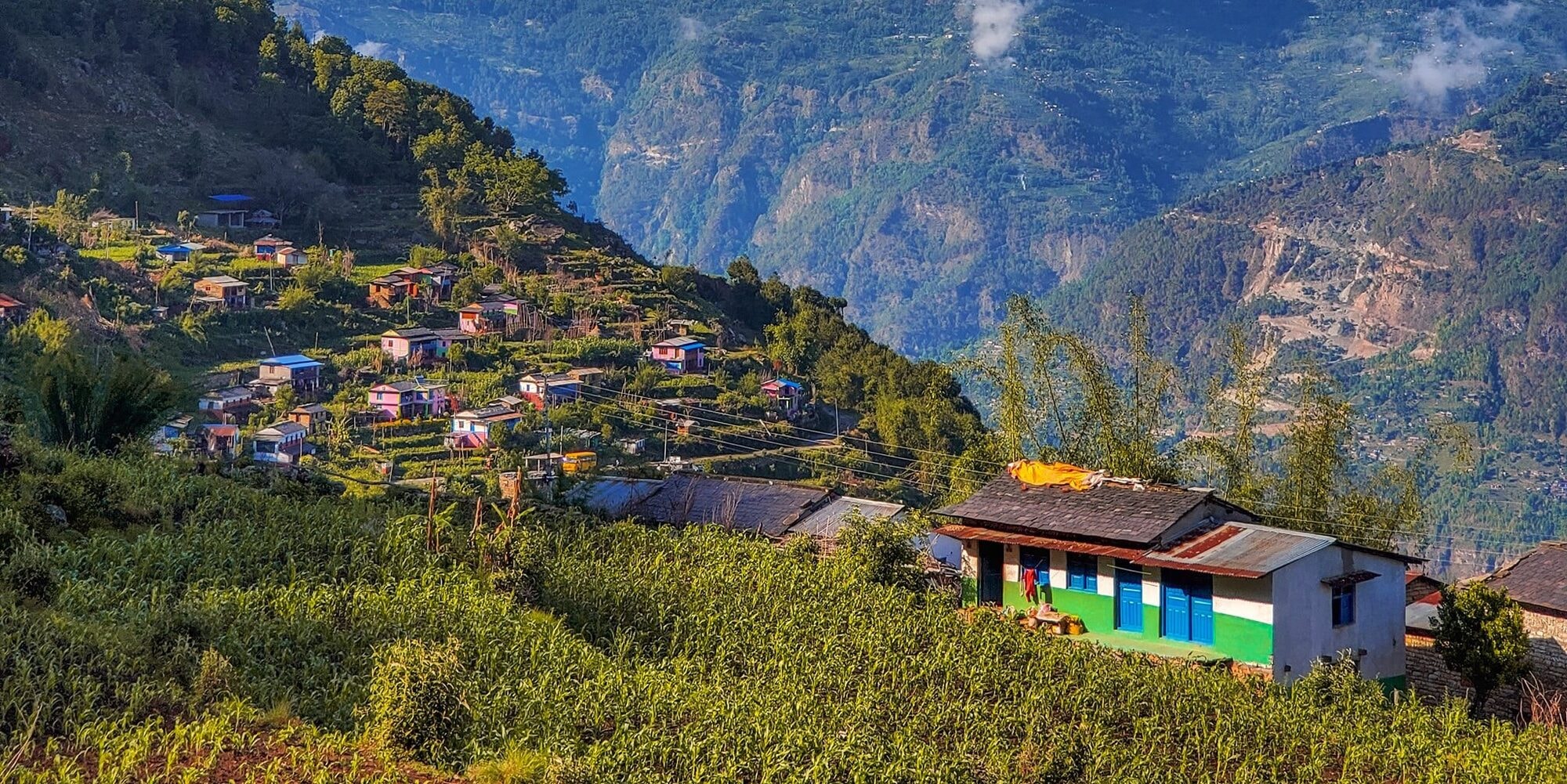
There’s something strangely comforting about returning to your roots. For me, that comfort always lived in my village: Sima. A place I visited once or twice a year, usually during Dashain and Tihar, when the air buzzed with laughter, the aroma of festive food, and the familiar chaos of cousins, neighbors, and old friends reuniting. To me, Sima wasn’t just a place. It was a feeling of togetherness, celebration, and warmth that comes from seeing a hundred known faces all at once.
But this time was different.
I visited during the off-season for a family ritual and pooja. It wasn’t Dashain. It wasn’t Tihar. It was just... a random time in the middle of the year. I went with the usual sense of anticipation, the giddy joy of escaping city life for a few days. But when I arrived, I was met not with the white noise but the thick, echoing silence.
I visited during the off-season for a family ritual and pooja. It wasn’t Dashain. It wasn’t Tihar. It was just... a random time in the middle of the year. I went with the usual sense of anticipation, the giddy joy of escaping city life for a few days. But when I arrived, I was met not with the white noise but the thick, echoing silence.
The village was empty.
The tall trees that once lined the narrow paths, shielding homes in leafy privacy, were gone. Only the sleek roads that led into the different parts of the village were there. I could now see houses that were once hidden behind layers of greenery; homes that had always felt like stories waiting behind curtains. And a strange part? Not a single adult in sight.
Only a few children were roaming around who were still too young to go to school or the farm. Every house I visited led to the biskun that were left to dry out in the sun on the pidhi and aagan, or elderly parents holding onto the house like it was the last anchor to the past. The people I used to laugh with, play cards with, and run through rice fields with were gone. Working in the cities. Studying abroad.
Chasing dreams, I suppose.
And suddenly, I felt betrayed by time. I came expecting the same usual familiarity; the same faces, the same games, the same chaos. But this time, it was like returning to a memory after it had already been packed away.
For a while, I felt angry. And sad. Maybe even a little guilty. How could they leave? Why is no one here?
But then, I caught myself.
Wasn’t I the same?
Wasn’t I the one who only visited the village when everything felt magical and convenient, only to leave again for a life in the city?
Wasn’t I the one who only visited the village when everything felt magical and convenient, only to leave again for a life in the city?
It would be hypocritical of me to mourn a change I was equally part of.
Everyone has places they need to be, dreams they need to follow. I saw it in the upgraded houses where the original reddish-brown hues and white facades were there, but the clay and smoothed white kamero were replaced by concrete, bricks, and tiles. It wasn’t that they forgot who they were. They just built upon it.
As the sun dipped behind the hills, I stepped out again. This time, the village began to breathe. I saw thin smoke curling from chimneys, filling the sky with that familiar scent of evening meals. I heard voices. Footsteps. Laughter. The villagers were returning from the farms, their clothes dusty, their bodies tired, but their spirits very much alive.
Every house I visited, despite their exhaustion, welcomed me in. They poured chiya, asked about my life, shared updates, and laughed like no time had passed. Their smiles, warm. Their care, unwavering. The kindness, selflessness, and affection that the villagers, especially the elders, offered me, still intact. I arrived empty-handed and left with bags full of snacks, food, and love. No matter how much the physical space had changed, the soul of the village remained beautifully stubborn.
That, I realized, was enough.
More than enough.
More than enough.
This wasn’t a loss, it was a transformation. My safe space wasn’t the buildings or the trees. It was the spirit of the people. And they were still there, holding down the fort for all of us who had to leave. Letting us come back, whenever we could, to warmth and stories and generosity.
And I finally see it for what it is: resilience wrapped in change.